A series of new recommendations published by University of Gloucestershire set out how councils across the county can support critical reductions in greenhouse gas emissions from the food and farming sectors.
Created through collaboration between local authority staff, the University’s Countryside and Community Research Institute (CCRI), the Gloucestershire Food and Farming Partnership and Climate Leadership Gloucestershire (CLG), the eight-point action plan is presented in a new report.
The recommendations form part of the Gloucestershire Food and Farming for Net Zero research project, in which council staff identified practical actions to reduce emissions from food systems – one of the key areas highlighted in the UK’s latest carbon budget for achieving its net zero targets.
“This research shows local authorities’ potential to innovate in the food and farming sectors and sets out clear next steps for partners in supporting the transition to net zero.”
– Dr Aimee Morse, Project Lead at the CCRI
The research found that all seven councils in Gloucestershire are keen to connect food and farming policy with their climate, health and wellbeing goals. However, a review of existing climate strategies revealed limited reference to food and agriculture. The new report suggests this is an area where councils could play a more coherent role in supporting innovation across the food sector.
“Climate Leadership Gloucestershire is pleased to have been able to support this important research. It provides a clear way forward for local authorities to play a more direct role in supporting our local food businesses and farmers, and enabling us to work together to create healthier and greener food systems.”
– Cllr Sebastian Field, CLG Chair, and Cabinet Member for Environment at Gloucester City Council
Priority projects will be selected from the action plan for further development, with research partners continuing to collaborate on implementation. Potential areas of focus include direct support for farmers in transitioning to greener practices; promoting healthy and sustainable food through planning policies; and improving the sustainability of food served at council-run events and festivals.
“The farming and food sectors can contribute to solving many environmental, social and health challenges, and already provide over 50,000 jobs in the county.
“I am delighted that our local councils are working together to create climate-friendly solutions, which both support local farmers and make delicious food affordable and readily available. The Partnership is committed to continuing to work with them as they implement the ambitious recommendations.”
– Dr Benjamin Dent, Gloucestershire Food and Farming Partnership’s
Notes to Editors: for more information, please contact the University press office on 01242 714516 or pressoffice@glos.ac.uk
University of Gloucestershire: www.glos.ac.uk
For quick facts about the university visit our About Us page
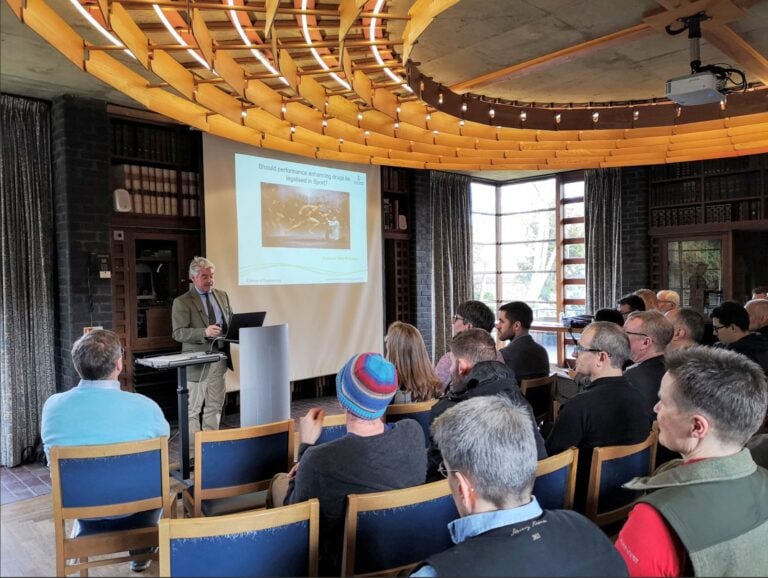
Photo credit: Dr Aimee Morse
Climate Leadership Gloucestershire comprises Gloucestershire County Council, the county’s six district councils, the NHS, the county’s universities and Gloucestershire Local Nature Partnership in a public sector partnership taking forward collaborative action on climate change.
Gloucestershire Food and Farming Partnership is part of 120-member national Sustainable Food Places network. The Partnership
- Works from farm-to-fork, along local farming and food supply chains and with agri-food organisations;
- Facilitates innovative collaborations between institutions and sectors which do not usually work together;
- Champions successful case studies across the county and beyond, so that they can be celebrated and replicated, and
- Levers the partnership team’s skills in systems thinking to integrate food and farming’s contributions to economic, environmental, health and social outcomes.
Further information can be found at: https://www.gloucestershirefoodandfarmingpartnership.org