At Lillian Faithfull, physiotherapy isn’t an occasional visit; it’s part of daily life.
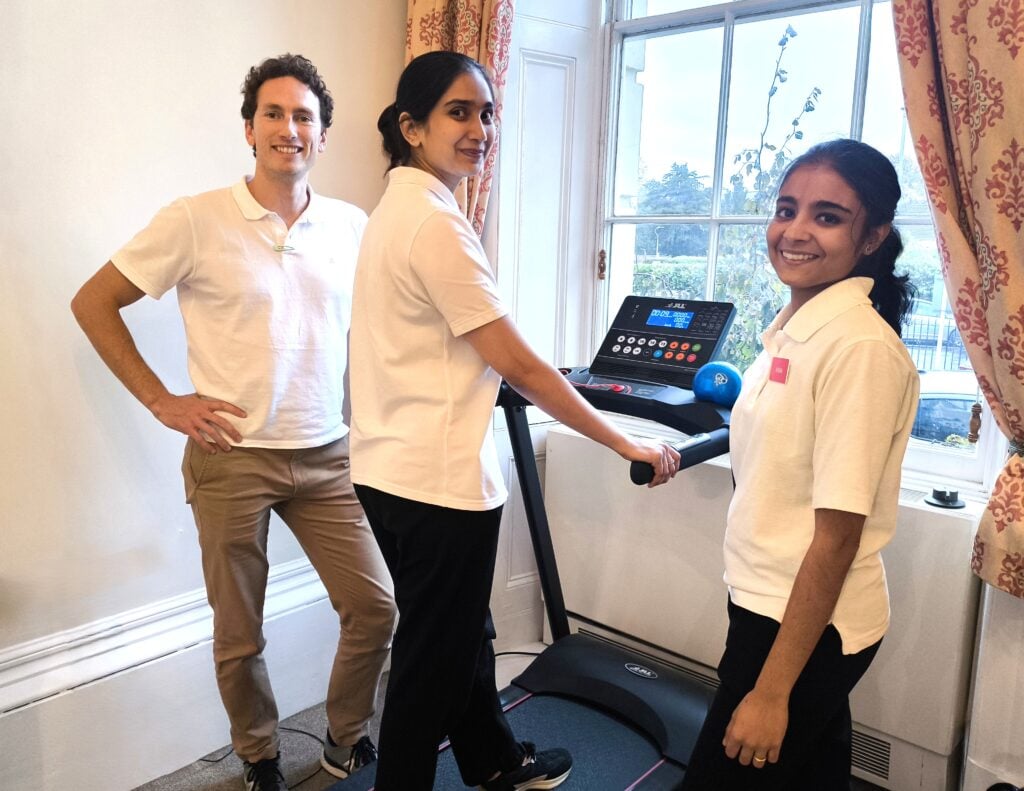
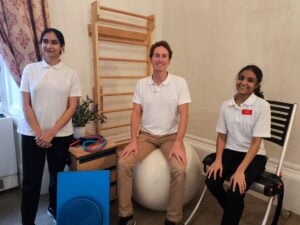
Across our homes, residents are supported by our team of in-house physiotherapists: Martin DeGroodt, Anna Pothen, and Sana Sajid, who help people stay active, confident and independent for as long as possible.
Last week we sat down with the team to explore what makes physiotherapy such a vital part of life in care, and why having an in-house team is makes such a difference.
Keeping residents independent, one step at a time
“Day to day, our main focus is independence,” explains Anna. “We help residents stay as active as they can in their daily routines… from walking and dressing to building confidence after a setback.”
The team’s role isn’t just about exercise programmes or mobility aids. It’s about helping people live their best possible life, supporting physical health, but also dignity and purpose.
Martin adds, “We’re here to keep people moving, yes, but it’s also about keeping them well. Movement supports strength, balance and confidence… all of which are essential for independence.”
Falls are not inevitable part of aging
The NHS reminds us that falls and fractures aren’t an inevitable part of ageing, and our physiotherapy team agrees. “They’re multi-factorial,” Martin explains. “Muscle weakness, medications, hydration, footwear, vision… they all play a part. The difference is, in a care home like ours, we can work on every one of those factors together.”
Having physiotherapists on-site means risk assessments, strength work, and balance training happen continuously, not just reactively.
Anna adds, “Sometimes the smallest changes – like improving strength in the lower limbs or adjusting walking routes – can make a huge difference.”
Confidence grows step by step
A fall can affect much more than the body. It can knock someone’s confidence and independence overnight. “After a fall, we go very slowly,” says Martin. “We build trust through small goals, helping residents realise they can move safely again. Once that confidence returns, everything starts to change.”
Anna agrees. “We always reassure people that they don’t need to be afraid. We’re there to support them physically and emotionally… and we find that being vocal about the support we offer helps to speed up recovery when it comes to confidence.”
Physiotherapy as a part of everyday life
Because Lillian Faithfull Care has an in-house team, physiotherapy isn’t limited to appointments. It’s part of everyday life. Martin explains: “We only see residents once or twice a week, but carers and activity teams carry on the work every day. We guide them, for example, to encourage residents to walk a few metres with support rather than use a wheelchair if safe to do so. Then quietly, those small moments add up to big improvements.”
Physiotherapy recommendations feed into care plans and team discussions, creating a joined-up approach that’s rare in the sector. “It’s not about ticking boxes,” Martin adds. “It’s about keeping people mobile, confident and well for longer.”
Our dedicated space at Faithfull House
Martin recently led the creation of the first physiotherapy gym at Faithfull House, complete with a treadmill, recumbent bike and stair exercises.
“The idea was to give residents a dedicated space to work on strength and stamina,” he explains. “They love it… it gives people motivation, purpose and visible progress.”
Although the gym sessions require supervision, they’ve become a symbol of what in-house physiotherapy makes possible. “Residents can see their progress in real time,” Martin says. “That’s incredibly powerful.”
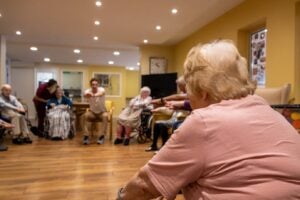 Group exercise session at Royal Court Care Home – Cheltenham
Families feel the difference
Physiotherapy also reassures families. “We meet families regularly,” Anna says. “They see the progress first hand. One family told us their father could only take a few steps when he moved in, now he walks the corridor. It is emotional for them and for us.”
Martin highlights how unusual it is for care homes to have in-house physios. “Most homes rely on visiting therapists. Having a team on site removes waiting lists and helps us deliver continuous, personalised care.”
Working with research and innovation
Our physiotherapy team are also passionate about innovation, not for technology’s sake, but for how it can make care safer, smarter and more dignified.
In the past they have collaborated with university researchers in Bristol on robotics and mobility projects, sharing insights from daily life in care to help shape technologies that truly meet older people’s needs.
“We were approached because we have the experience,” Martin explains. “Our residents and staff could help researchers understand what really works in real settings… not just on paper.”
That same spirit of innovation continues across our homes. Martin recently demonstrated the Raizer Lifting Chair, a mobile, battery-powered chair that gently raises someone who has fallen back to a stable seated position within minutes. “It’s safe, fast and dignified,” he says. “It means a single carer can respond quickly after a fall without putting strain on themselves or the resident. It’s a great example of how small bits of innovation can make a big difference.”
By trialling new tools and approaches like this, the team helps ensure that technology supports, rather than replaces, the personal connection at the heart of care. “If a device helps someone feel safer and more confident, that’s a win,” Martin adds. “But it always works best alongside people who care.”
Ties with local universities
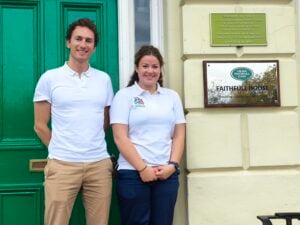
Recently, Martin and the team have been joined by Jemima Gascoyne, a Level 4 Physiotherapy student from the University of Gloucestershire, completing her four-week placement with the team.
“I hope to learn how to treat patients by applying the knowledge I’ve gained at university and putting it into practice,” Jemima says. “I also want to understand what a care home setting entails, and how to support people living with dementia and frailty.”
This collaboration forms part of the University’s practical training module, designed to prepare students for real-world, person-centred care. The module explores professionalism, ethics, data protection and multidisciplinary teamwork within the UK’s health and social care system. Students learn essential physiotherapy skills such as manual handling and movement facilitation before completing placements that bring theory to life.
Martin explains, “It’s rewarding to share what we do here. Care homes offer such a rich environment for learning – you see the real impact of person-centred care every day. It’s great to help shape the next generation of physiotherapists.”
Common myths, and simple advice
One common myth the team wants to challenge is that physio is only for rehabilitation after an injury.
“Physiotherapy should be proactive, not just reactive,” Anna says. “A little strength work and daily walks now, can make a huge difference later.”
Their practical advice for older people and families is straightforward. Keep moving, include small strengthening and balance challenges in daily life, stay hydrated and prioritise bone health. “If you do not use it, you lose it,” Martin reminds us. “Consistency matters.”
Looking ahead
The team sees a future where physiotherapy becomes more embedded across care. “Physio should be part of everyday care, not a luxury,” Martin says. “With an ageing population and pressure on hospitals, having physios in care homes helps keep people out of hospital and better supported at home.”
Sana adds that partnerships between the private and public sector will be important.
“We can be the bridge between hospital discharge and community life, providing the right input so people do not return to hospital after a fall.”
Final thought
The work of Martin, Anna and Sana shows how integrating physiotherapy into everyday care with our homes, can have a big impact on safety, wellbeing and quality of life. It changes the experience of residents, reassures families and strengthens the whole care team.
At Lilian Faithfull Care, physiotherapy is not an add-on, it is central to helping people stay stronger for longer.
If you would like to find out more about our physiotherapy services or to arrange a visit to one of our homes, please get in touch.
Find out more and book a visit to our homes