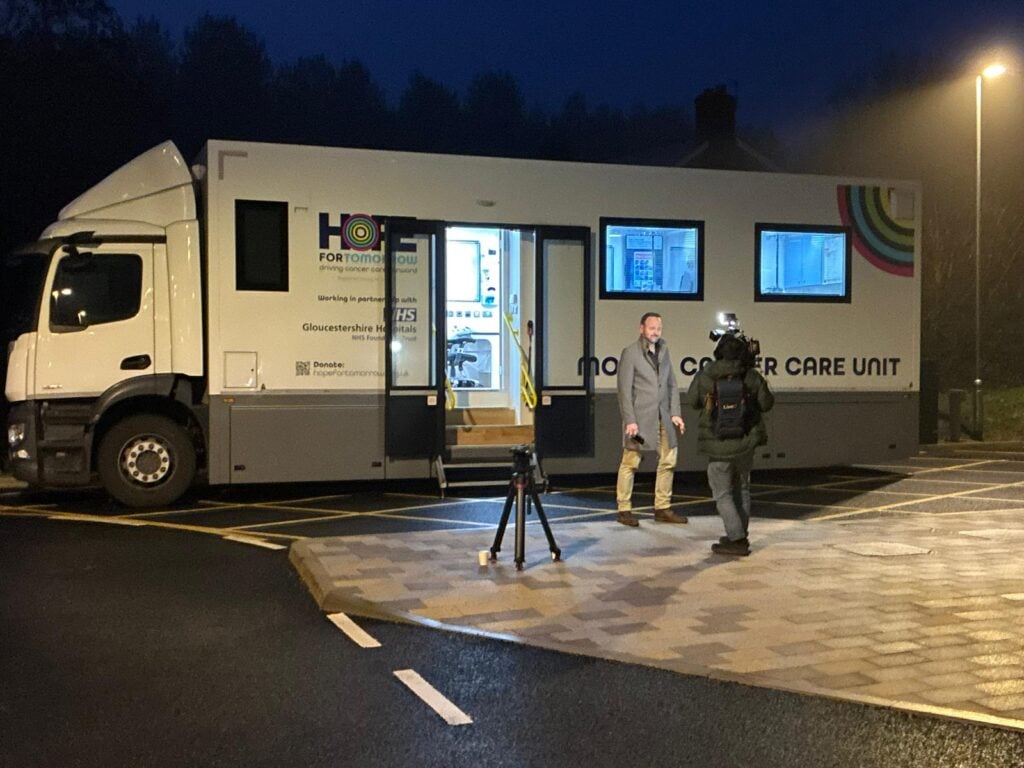
The National Cancer Plan sets out how the government will improve cancer services so that 3 out of 4 people diagnosed with cancer survive for 5 years or more by 2035. Gloucestershire-based national cancer care charity Hope for Tomorrow was honoured to join the discussion by being invited to feature on ITV’s Good Morning Britain, with the opportunity to showcase a mobile cancer care unit and highlight how our work fits into the new national cancer plan.
Filmed on board their Gloucestershire-based mobile cancer care unit, following its journey from its base at Gloucester Royal Hospital to its community treatment location for the day in rural Cinderford, Forest of Dean, the segment highlighted how the charity’s fleet of mobile cancer care units is already helping to tackle health inequalities.
WATCH THE COVERAGE HERE
The national cancer plan is based around six key commitments, which include:
- Driving up NHS cancer performance
- A global leader in cancer outcomes by 2025
- Designing cancer care around people’s lives
- Delivering world-class cancer care through world-class research
- Children and young people’s cancer
- Prioritising rare and less common cancers
Reducing health inequalities is integral to the delivery of the national cancer plan.
The national cancer plan has an overall ambition that from 2035, 75% of cancer patients will be cancer-free or living well in five years.
A big part of this is designing cancer care around people’s lives – providing an increased people-centred approach, giving patients more control, choice and more convenience. While this is a new national strategy, it’s a vision Hope for Tomorrow have been pioneering for 20 years, thanks to their mobile units bringing cancer care into communities.
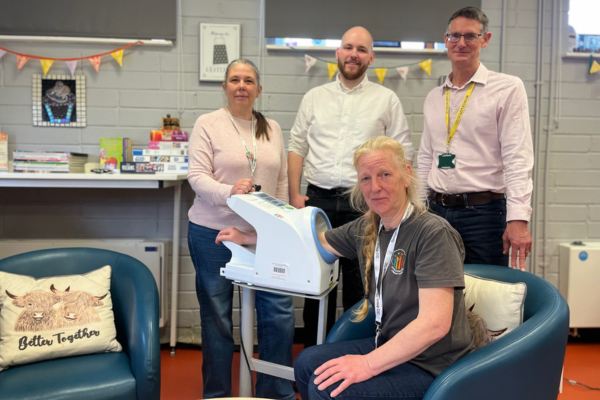
Similarly, the charity are also welcoming the increased rollout of screening provisions across the NHS. Their expansion into screening and prevention services in 2024 means that our lung health assessment unit, which operates alongside a second unit equipped with a CT scanner, has created a comprehensive screening facility and is part of the NHS Lung Cancer Screening Programme, helping with earlier detection and faster diagnoses, leading to improved treatment options and outcomes. The lung health assessment unit is based in Greater Manchester, bringing lung health checks to some of the most deprived and underserved communities in the area.
Closing the gap in health inequity is a significant aspect of the cancer plan, increasing awareness, screening uptake and access to cancer services no matter where patients live. The national cancer plan states that “People from poorer parts of the country are more likely to be diagnosed late and less likely to get the best care, while people with disabilities, LGBT+ people, and people from some ethnic groups are less likely to access screening and clinical trials.” This is why we need to work towards ensuring everyone has the same opportunity to survive cancer, regardless of whether they’re in villages or cities, by the coast or in the countryside. Bringing mobile cancer care units and community-based screening facilities closer to patients will enable this transformation.