For most of my career, I stayed firmly in the NGO and government world. It felt like the obvious place to be if you cared about impact. Purpose was built into the work, and I wanted my time and energy to contribute to something meaningful.
Business, on the other hand, always seemed… different. Competitive, profit-first, often even extractive.
For a while, I struggled to see how that system could really change.
Then I discovered the B Corp movement and it completely reframed what business could be.
Over the last 8 years working in this space, I’ve seen companies prove that profit and purpose are not mutually exclusive. In fact, when businesses design their model around solving real problems, they often become stronger commercially too.
I’ve seen organisations doing things like:
- Stroud Brewery | B Corp committing to organic brewing to support regenerative agriculture, while sourcing the majority of their supplies locally and serving mainly local customers – strengthening their regional economy.
- Chirpy Heat focusing sustainability consulting on social housing so lower-income families can live in healthier, more efficient homes.
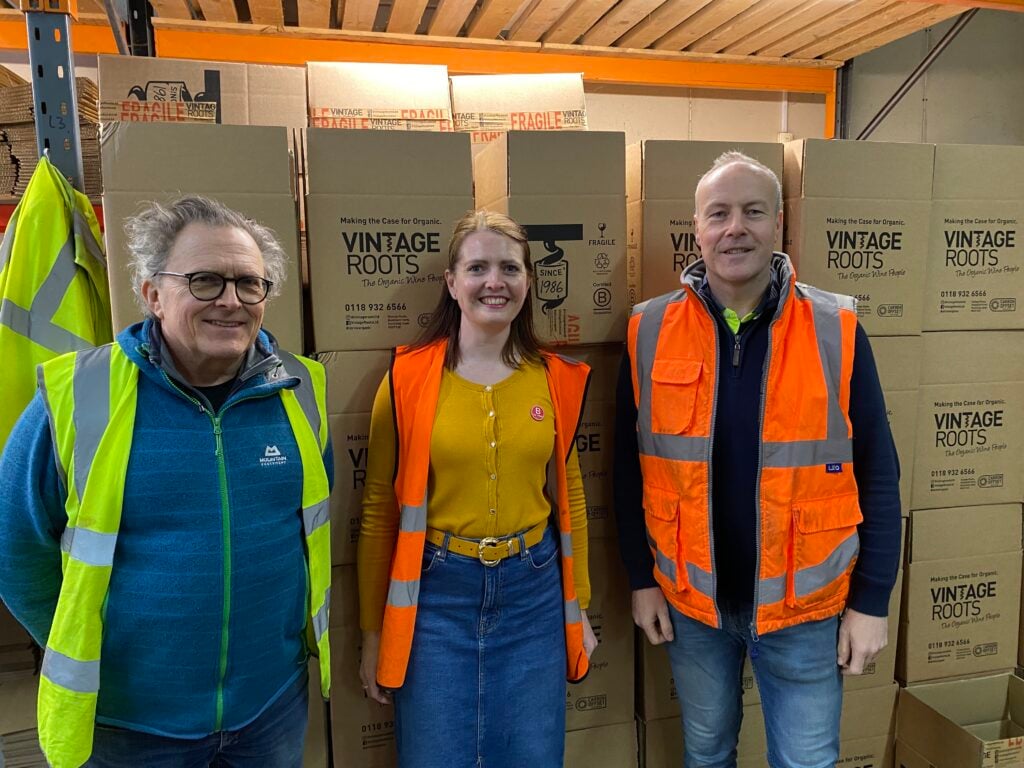
- VINTAGE ROOTS LIMITED only selling organic-certified drinks to support agriculture that doesn’t deplete the soils and increases biodiversity
- Organico Realfoods | Certified B Corporation – again, only selling organic-certified food products and creating a truly responsible fishing standard, Fish4Ever | Certified B Corporation, which only supports local boats and only allows highly targeted methods.
- Peppy building workplace support for menopause and men’s health – issues that have long been overlooked.
In the B Corp world, businesses like these are recognised for having Impact Business Models – where the positive impact isn’t an add-on, it’s baked into how the company makes money.
Until 2026, companies earnt significant points in the certification for this. But from now on, the new B Corp standards will go further: businesses will need to demonstrate this kind of impact at their core.
To me, that shift is incredibly hopeful.
Because when purpose is embedded in the way a company operates, something powerful happens:
🤩 talented people want to work there
🥳 customers stick around
💚 new opportunities appear
And yes, the business becomes more profitable too.
That’s the virtuous circle: profit enabling purpose, and purpose strengthening profit.
If more businesses operated this way, the impact could be huge.
It’s also the belief that sits behind the name of my own businesses: the idea that better business leads to a better world.
If you’d like to talk about how your business can make profit with purpose, contact Camilla Barnes of Better Business. Better World camilla@betterbusinessbetterworld.org
Or better yet, book in to have a free 1:1 Green Gap review in person with Camilla at C2S HQ on 1st May https://www.c2sgrowth.com/events/11-clinic-with-camilla-barnes-esg-bcorp-iso14001/